
Cryo-EM Characterization

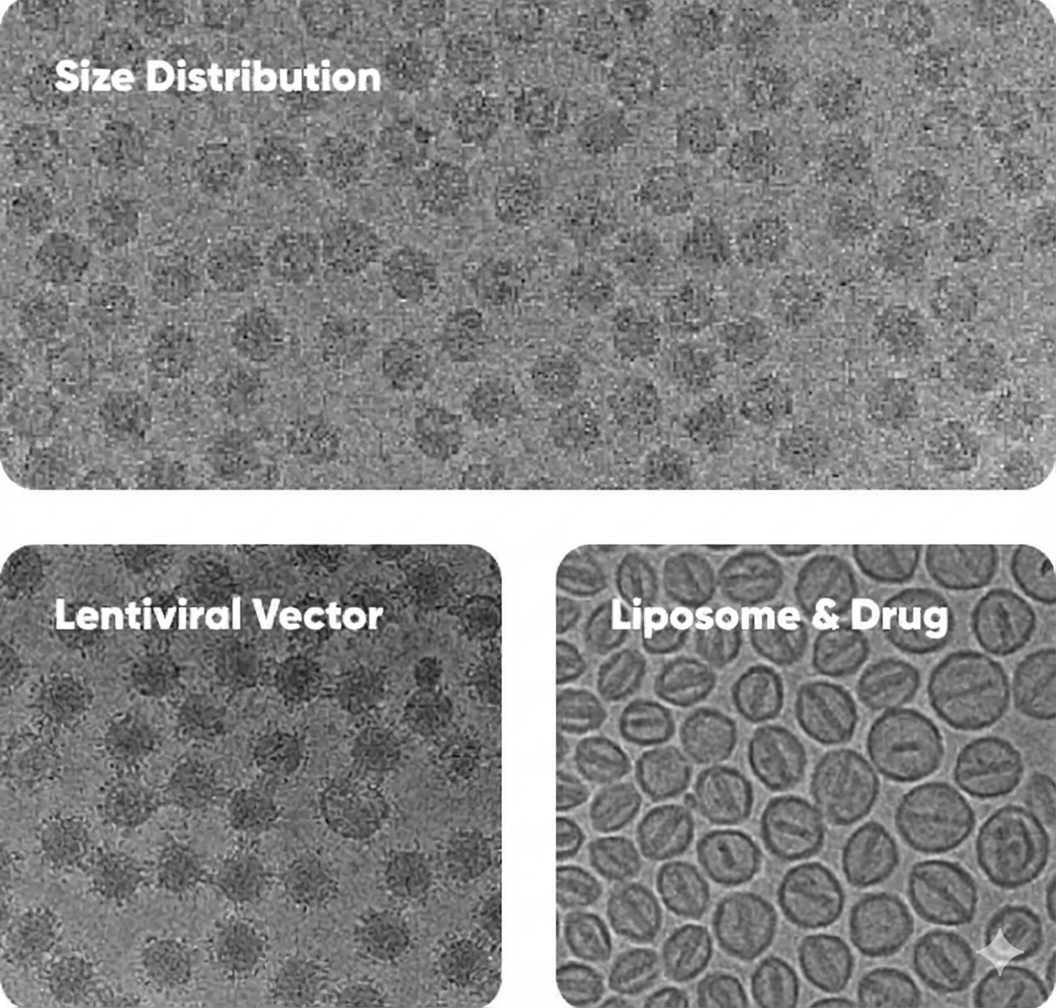
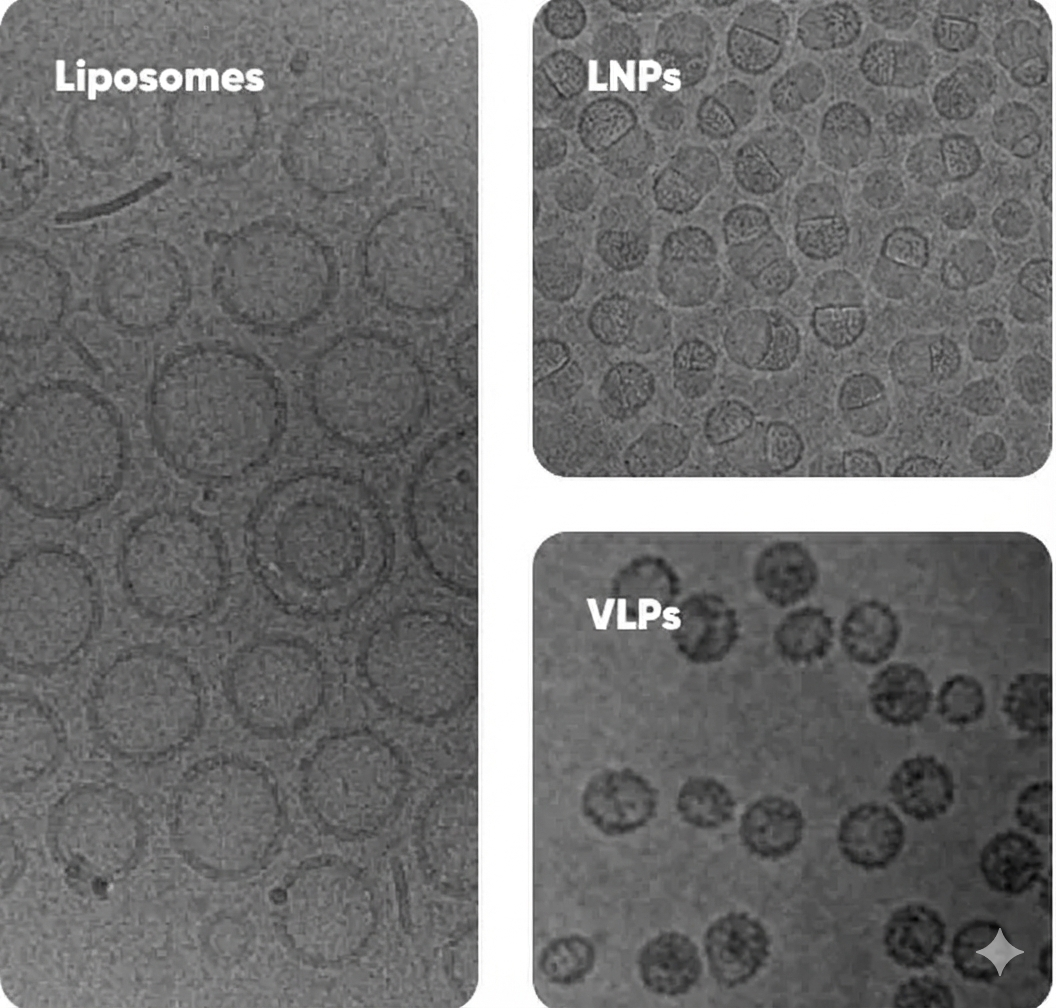
We specialize in cryogenic electron microscopy (Cryo-EM) for advanced nanoparticles, lipid-based systems, viral vectors (AAV), and complex delivery architectures. Our state-of-the-art platform and expert team deliver precise insights into particle size, morphology, polydispersity, encapsulation efficiency, and structural integrity—driving reliability in next-generation drug delivery and gene therapy formulations.

Introducing NanoSMART: G-Hexa's AI-Enhanced CryoEM Advantage

NanoSMART is our proprietary AI-powered Cryo-EM analysis system that automatically detects and characterizes nanoparticle features across images from diverse electron microscopes.

It rapidly generates precise masks, size distributions, morphology classifications, and encapsulation metrics based on user-defined criteria. With a single click, users obtain comprehensive, ready-to-deploy reports—while the system intelligently enhances recognition accuracy, even in challenging low-contrast or beam-sensitive images.

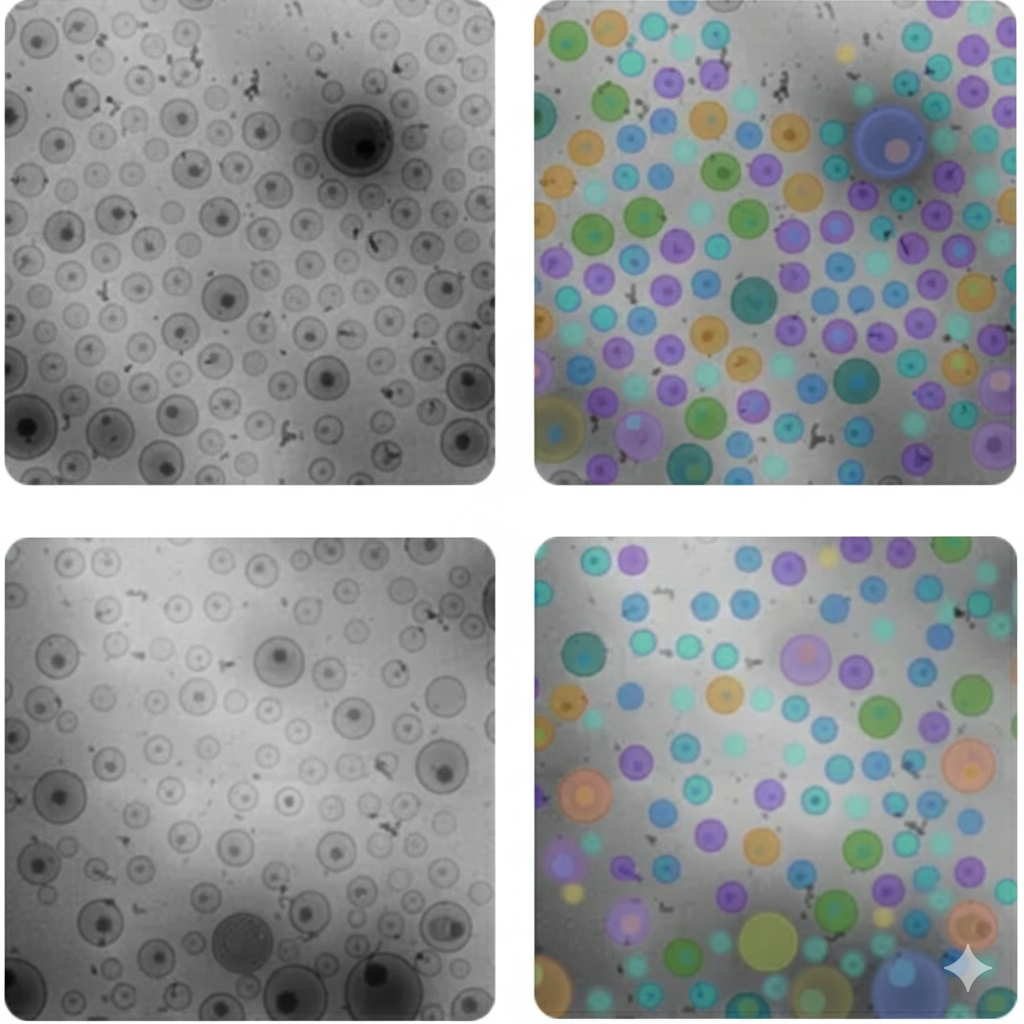
NanoSMART Recognition Performance: Liposome Variants

The accompanying figures demonstrate NanoSMART’s robust recognition across liposome types at varying particle densities. Two density conditions are shown—high and sparse—with paired raw and annotated images for each.

Liposome-1

Comparisons reveal consistent detection accuracy regardless of particle count. NanoSMART precisely excludes ice contaminants in the background while accurately identifying multi-lamellar structures in low-contrast regions.

Liposome-4

Similar stability is observed, with reliable segmentation of complex morphologies even in sparse distributions—ensuring high-fidelity size, shape, and encapsulation analysis across challenging CryoEM datasets.

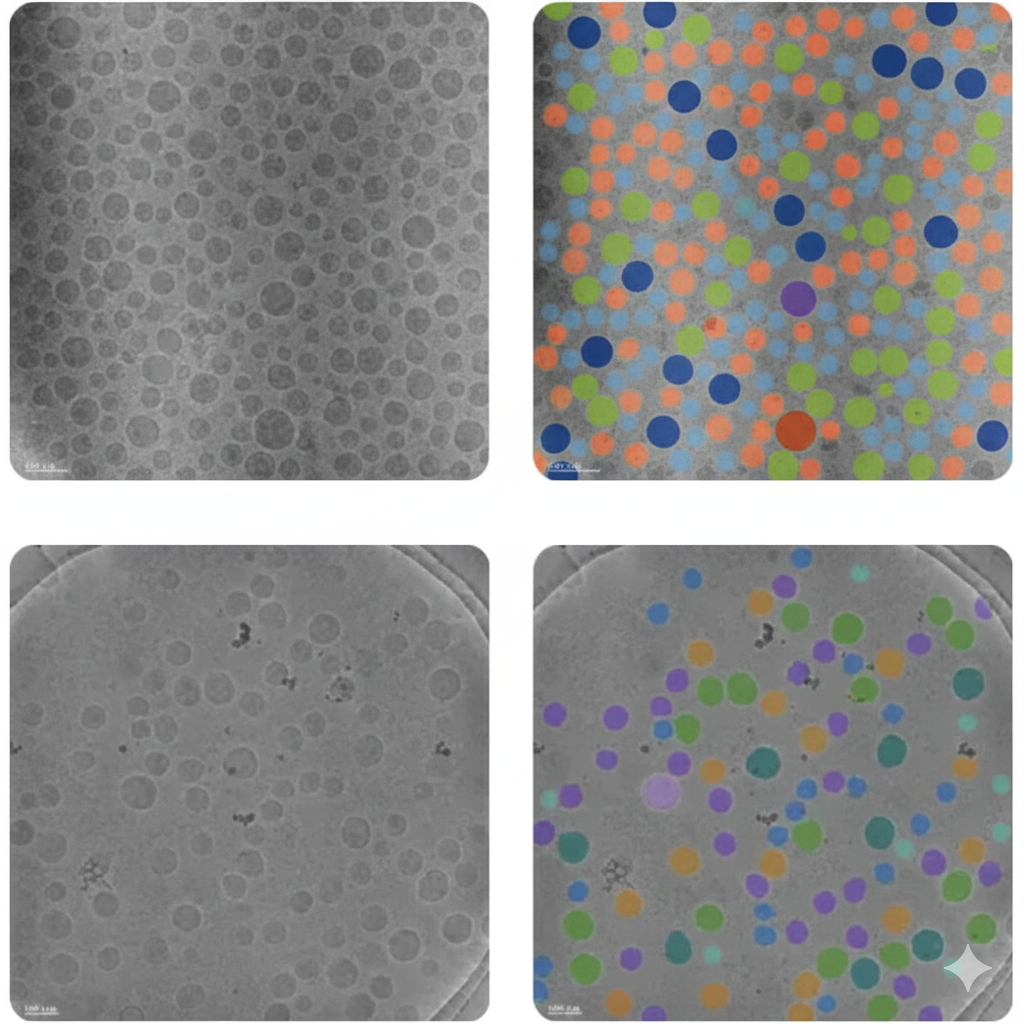
NanoSMART Recognition Performance: LNP Variants

The accompanying figures showcase NanoSMART’s robust detection of LNP types under varying brightness and contrast conditions. Two scenarios are presented: (1) low brightness with high contrast—featuring densely packed particles and sharp edges; (2) high brightness with low contrast—showing sparse particles and blurred boundaries.

LNP-1

Analysis confirms highly consistent recognition across both conditions. In the high-contrast set, NanoSMART intelligently filters out mildly blurred or overlapping particles, while in the low-contrast set, it reliably segments particles despite edges blending into the background.

LNP-2

Equivalent performance is achieved, with precise masking and morphology classification maintained—even in challenging, low-signal environments—ensuring accurate size distribution and encapsulation metrics for demanding CryoEM datasets.

NanoSMART Recognition Performance: VLP Variants

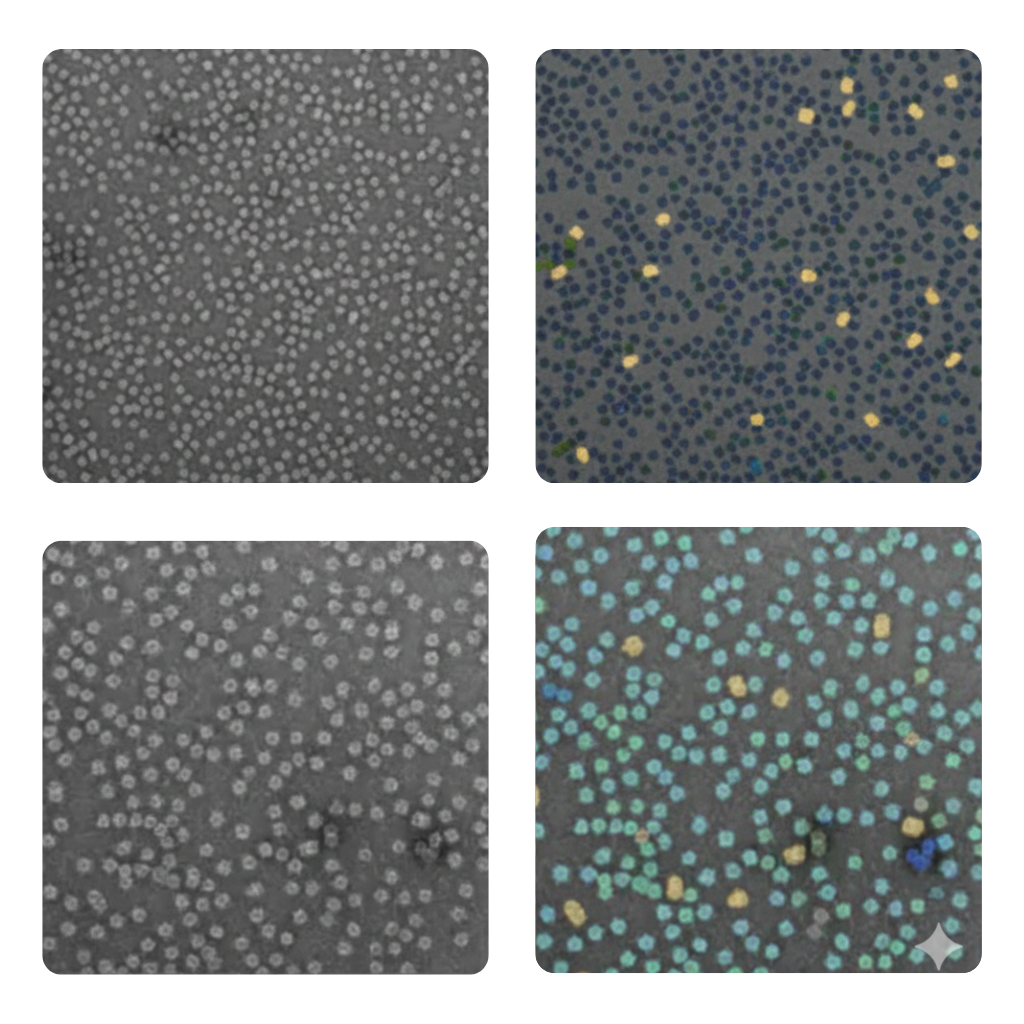
NanoSMART excels in detecting Virus-Like Particles (VLPs)—ultra-small, high-density targets challenging for standard CryoEM analysis. Unlike larger liposomes or LNPs, VLPs appear as numerous tiny particles even at low magnification. Our system employs dedicated sampling modes and tailored filtering rules, enabling precise recognition and segmentation of these nanoscale architectures.

VLP-1

The accompanying image set shows 800–900 particles per field, with near-100% recognition accuracy. Only rare overlapping or morphologically deviant particles are intelligently filtered, ensuring reliable size, distribution, and structural integrity metrics.

VLP-2

Consistent high-fidelity performance is maintained across datasets, delivering accurate masking and quantification essential for advanced vaccine and delivery system development.

Statistical Dimension Presentation

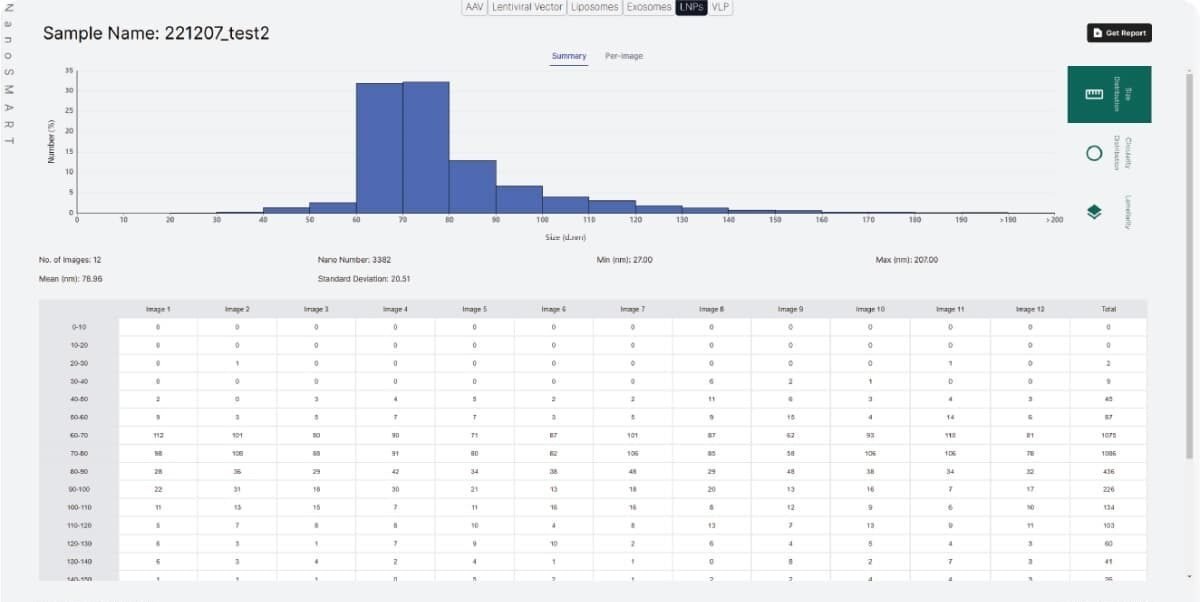
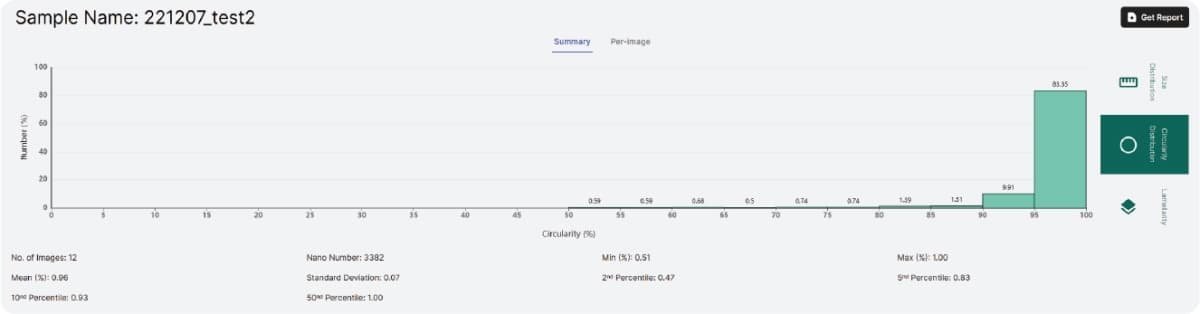
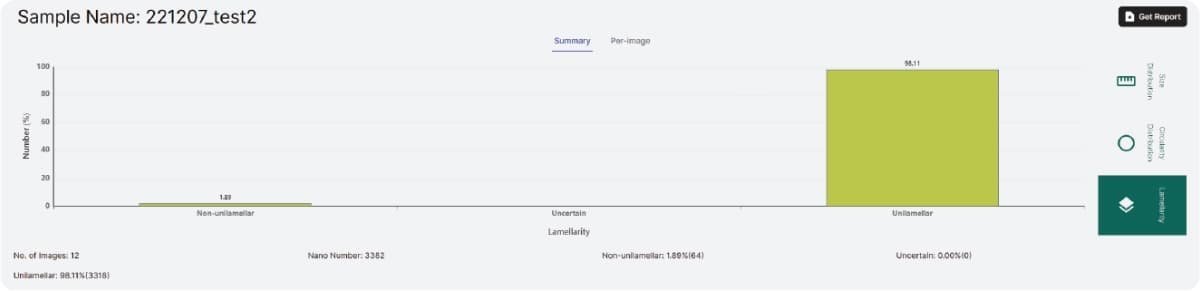
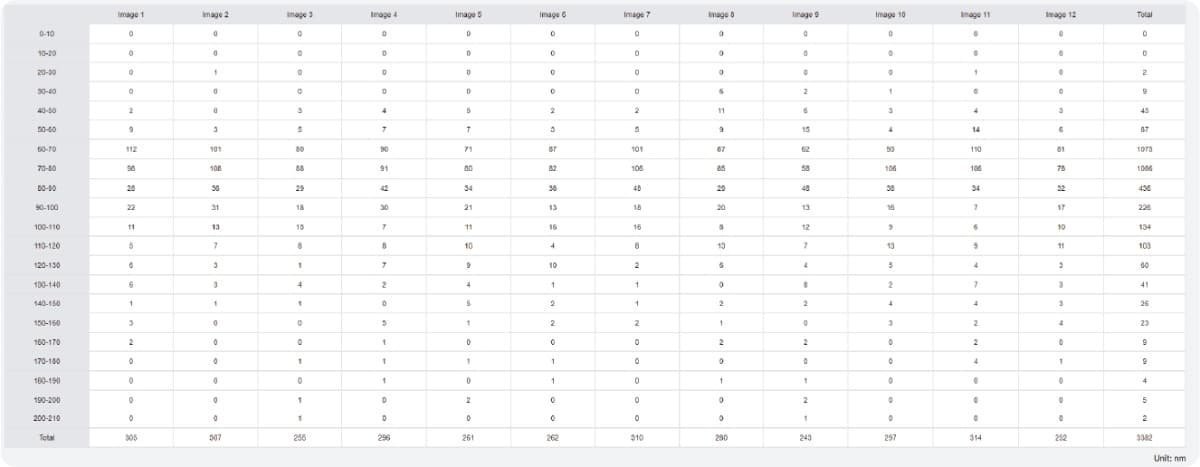
The right figure uses a set of Liposome type projects as an example to showcase the system’s data analysis capabilities and user-friendly data presentation features beyond basic nanoparticle recognition.
This functionality is divided into two parts: the overall project data summary, presenting all valuable information about this set of images in different ways, and the detailed information for individual images, including modules for free preview, particle editing, color differentiation, and independent data display boards.

NanoSMART Project Data Summary

Histogram Display Area, Multidimensional Statistics Area, Tabular Data Area these modules offer a complete view—from high-level population statistics to individual particle insights—combining quantitative data, proportional analysis, and intuitive graphical representations for rapid, reliable CryoEM dataset interpretation.
Switchable histogram dimensions: circularity, bilayer membrane, etc.
Particle size distribution table: The complete table has different images on the X-axis and particle size distribution intervals (nm) on the Y-axis.

Using NanoSMART, G-Hexa will be able to provide more efficient characterization services and deliver to customers clearer and more detailed reports.

Send Us Enquiry

Connect with G-Hexa. Unlock advanced materials together.
To discuss CryoEM characterization, NanoSMART analysis, or custom material systems, fill out the form—our experts will respond promptly.